Deck repair in Sachse is priced by the scope, with board-only repairs costing less than railing, stair, joist, or structural repairs. Because the repair scope depends on the actual condition of the framing and the surface, there is no single universal rate — the values below are typical DFW planning context, not guaranteed Sachse Carpenters pricing, and we provide a written estimate after evaluating the deck.
Updated: September 2026.
Board-Only Repair Pricing
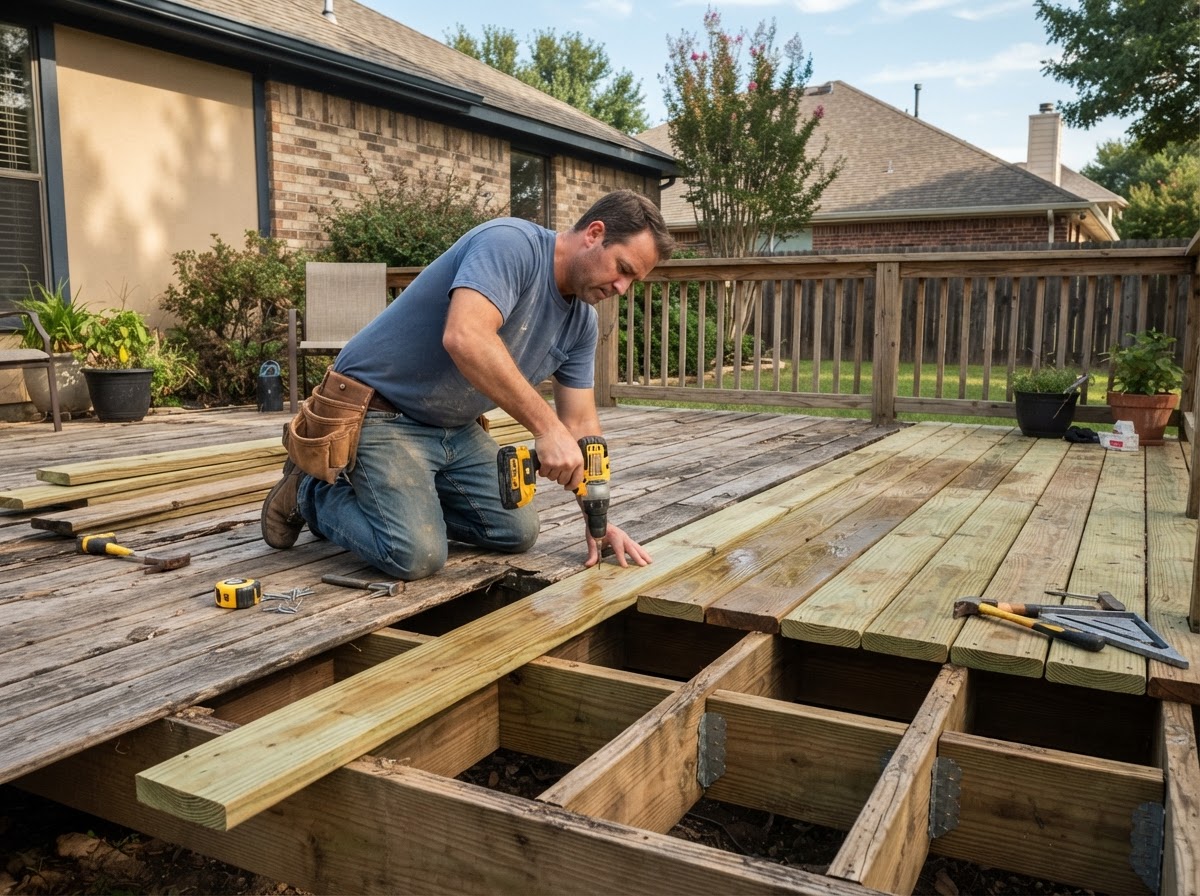
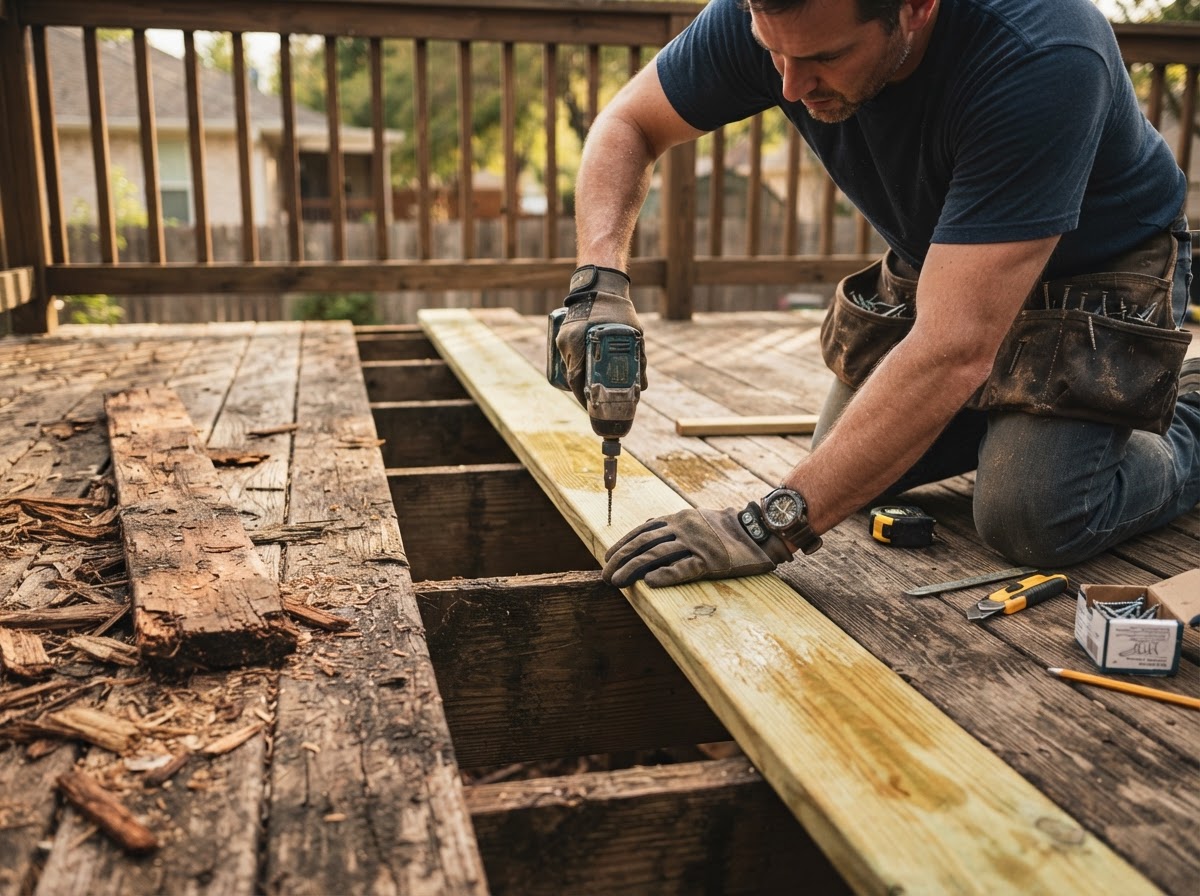
Board-only repairs — replacing soft, split, or rot-damaged deck boards — are the lowest-cost deck repair, scoped to the number of boards and the fastening system. The framing under the replaced boards is evaluated at the same time.
What changes the price: board count, material, fastening system, and framing condition under the replaced boards.
Railing Repair Pricing
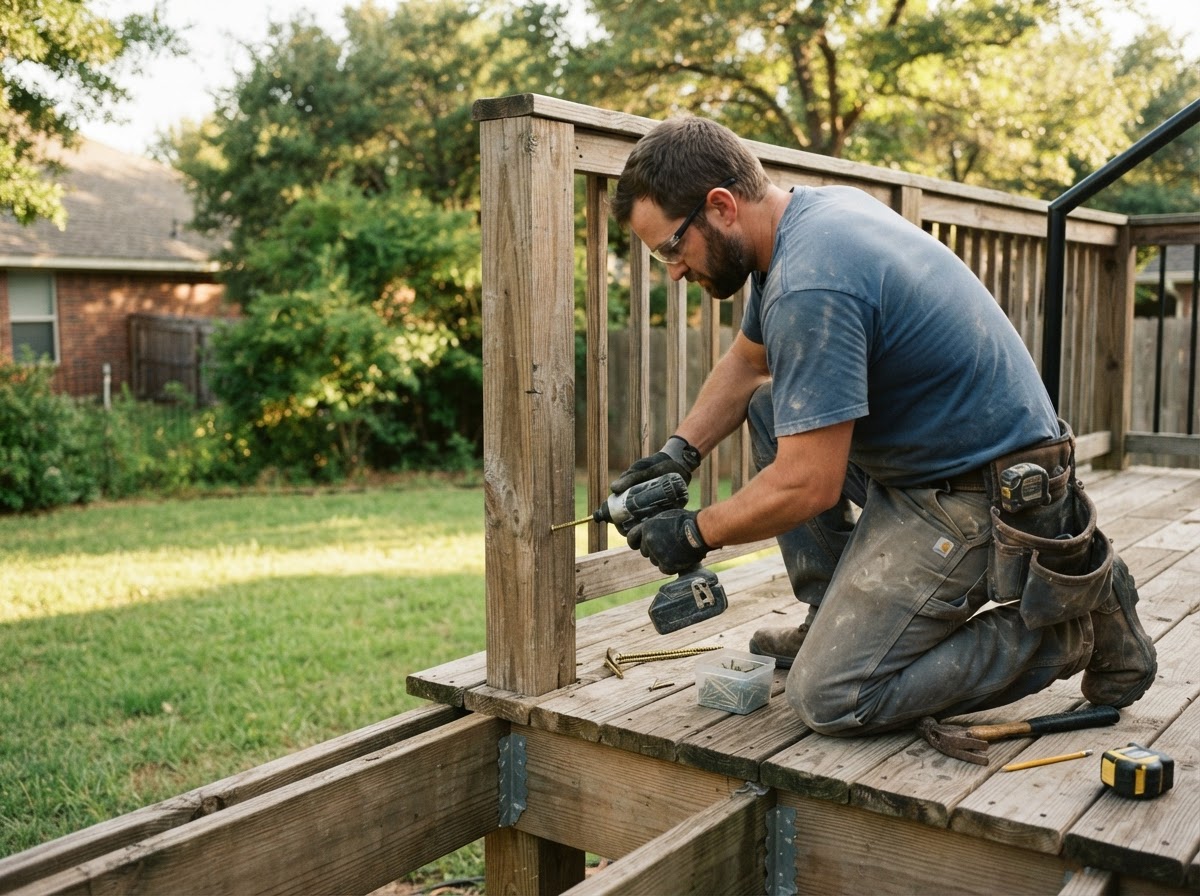
Railing repairs — re-securing loose rail posts, guard rails, and handrails — are scoped to the rail length and the post count. A single re-secured post costs less than a full railing rebuild.
What changes the price: rail length, post count, structural attachment, material, and existing condition.
Stair Repair Pricing
Stair repairs — replacing damaged stringers, treads, and connections — are scoped to the stair count and the stringer condition. A tread replacement costs less than a stringer re-build.
What changes the price: stair count, stringer condition, tread material, and structural attachment.
Structural Framing Repair Pricing
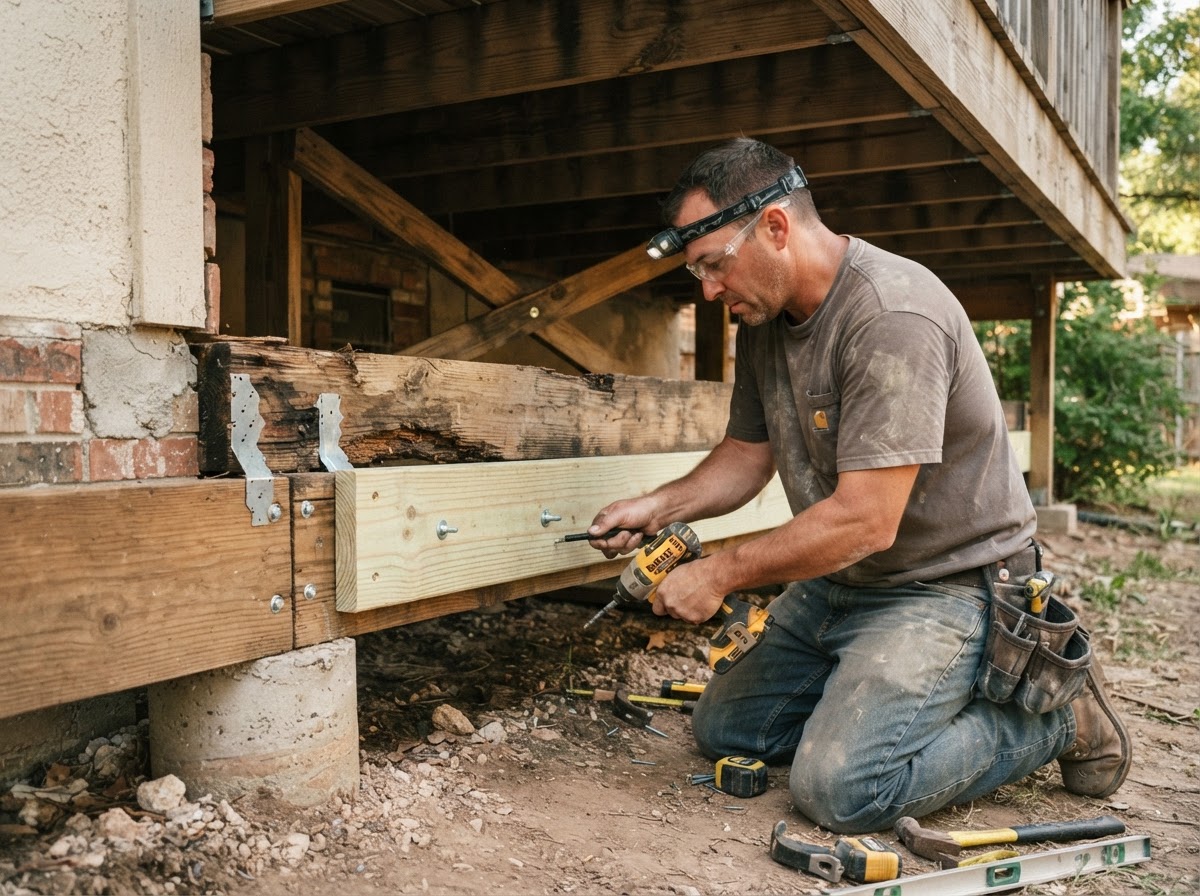
Structural framing repairs — replacing damaged joists, beams, posts, or ledger components — are scoped to the extent of the damage and the access. A single sistered joist costs less than a full ledger and joist rebuild.
What changes the price: damage extent, joist vs beam vs post involvement, access, replacement material, engineering where required, demolition, and finish restoration.
Repair vs Replacement
Honest repair-vs-replacement guidance is part of every deck evaluation — a few soft boards are a repair, while widespread framing damage, a failed ledger, or repeated repairs may make replacement the better long-term choice. The recommendation matches the condition, not the scope that benefits the bill.
What changes the price: extent of damage, framing condition, repeated repair history, layout and function, and structural changes needed.